Donate Now
Community First
  • Home
  • About
  • Aquaponics
  • Blog
  • Programs
    • Family Aquaponics
    • Education
    • Research and Development
  • Take Action
    • Donate Now
    • Start Fundraising
    • Host a Workshop
    • Volunteer
    • Events
    • Store
  • Contact
    • Sign Up
  • Home
  • About
  • Aquaponics
  • Blog
  • Programs
    • Family Aquaponics
    • Education
    • Research and Development
  • Take Action
    • Donate Now
    • Start Fundraising
    • Host a Workshop
    • Volunteer
    • Events
    • Store
  • Contact
    • Sign Up

People, innovation, and purpose

10/4/2023

0 Comments

Summer 2023 Volunteer Program (Part 1)

 
At Community First, our mission is to sustainably create local solutions to the global problems of poverty by building bridges and creating a dialogue between those with intellectual, financial, and other essential resources and those with needs. Of course, this involves the support of foundations and donors, but today, we want to celebrate another type of contributor: our volunteers!
Since 2015, our organization has been blessed with an ongoing relationship with the students from The University of Edinburgh’s Engineering Department. For the past eight years, they have sent our way a team of 4-5 dedicated volunteers over the summer. And while this was put on hiatus during the COVID shutdowns, we’re delighted to have resumed this program this past summer, as are the students! Don’t take our word for it; here are Cathal Callan’s own words on his time at the farm school in rural Cambodia.

Volunteering in Rural Cambodia

by Cathal Callan
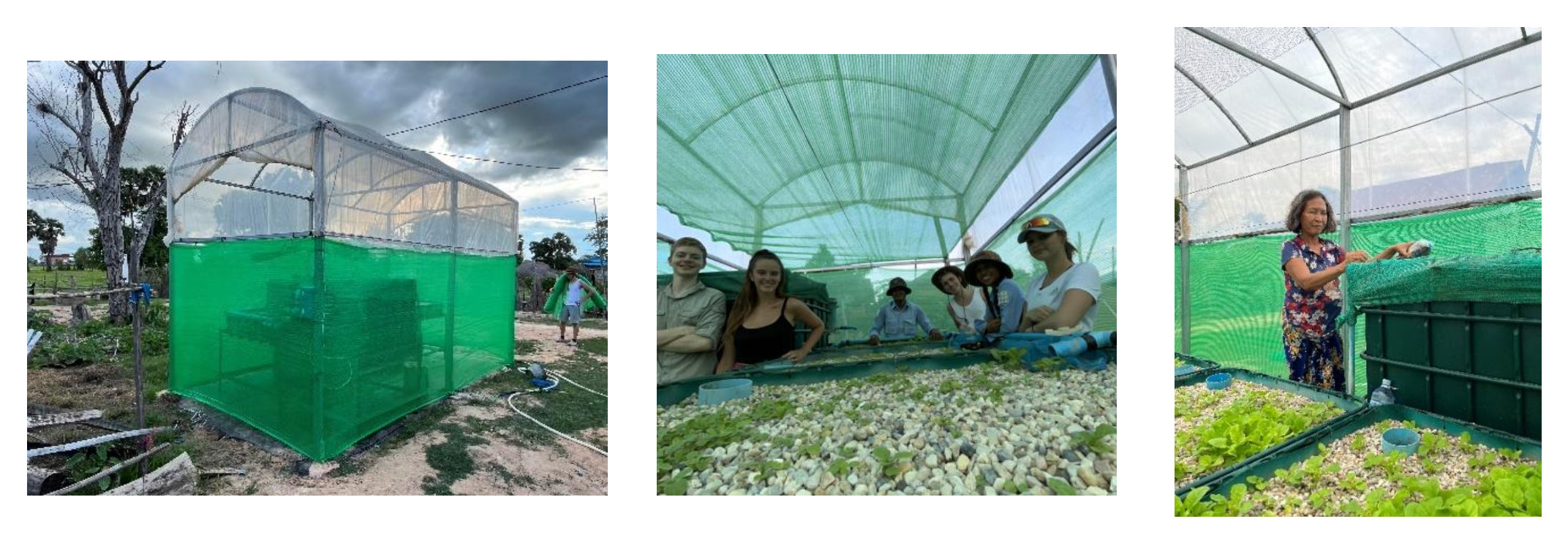
In the summer of 2023, I spent 6 weeks volunteering with the NGO Community First in Kralanh District in rural Cambodia. I traveled as part of a team of four engineering students from the University of Edinburgh’s Engineering For Change Society. The aim of our trip was to complete the construction of a new aquaponics system in a local village and develop Community First’s Farm School campus.
Aquaponics is a sustainable farming method that combines small-scale fish farming with hydroponic plant cultivation. Fish produce nutrient-rich waste in water which is transported by gravity through a filter and then into plant beds containing gravel. This nutrient-rich water runs through the gravel plant beds, eventually reaching a sump tank beneath. The water is then pumped back into the fish tank, and the cycle repeats.
Aquaponics is a very useful agricultural system, as it yields up to three times the crops per square foot on average compared to typical soil culture. It is particularly effective in rural Cambodia, where the rainy and hot seasons make growing vegetables in the ground difficult. Aquaponics systems can operate year-round and provide local families with food, both fish and vegetables, to eat and to sell for profit. By doing so, these systems help tackle the major problems of malnutrition and food security; 30% of children in Cambodia suffer from stunting as a result of malnutrition.
Picture
The completed aquaponics system at Angkaol Village
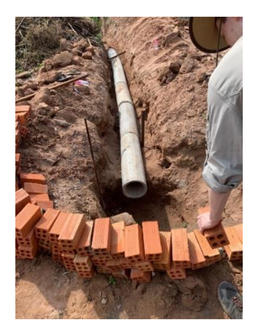
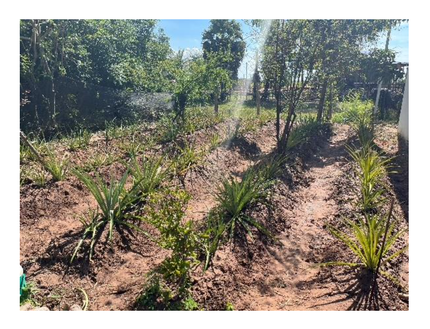
In addition to the construction of a new system in the village of Angkul, the team carried out construction work to help develop the Community First Farm School campus. Two new areas were paved, and an underground drainage pipe was installed in order to help prevent the site from flooding in the rainy season. Two overgrown sections of the farm were cultivated and transformed into new pineapple patches with over 150 plants. A new sugarcane patch was planted too.
Picture
Installing the new drainage pipe
Picture
One of the new pineapple patches
The team also created a User Manual to give to families receiving a new aquaponics system. This contained all the information required to operate the system, such as how to care for the fish, identifying nutrient deficiencies in the plants, and dealing with pests. It was written in both Khmer and English.
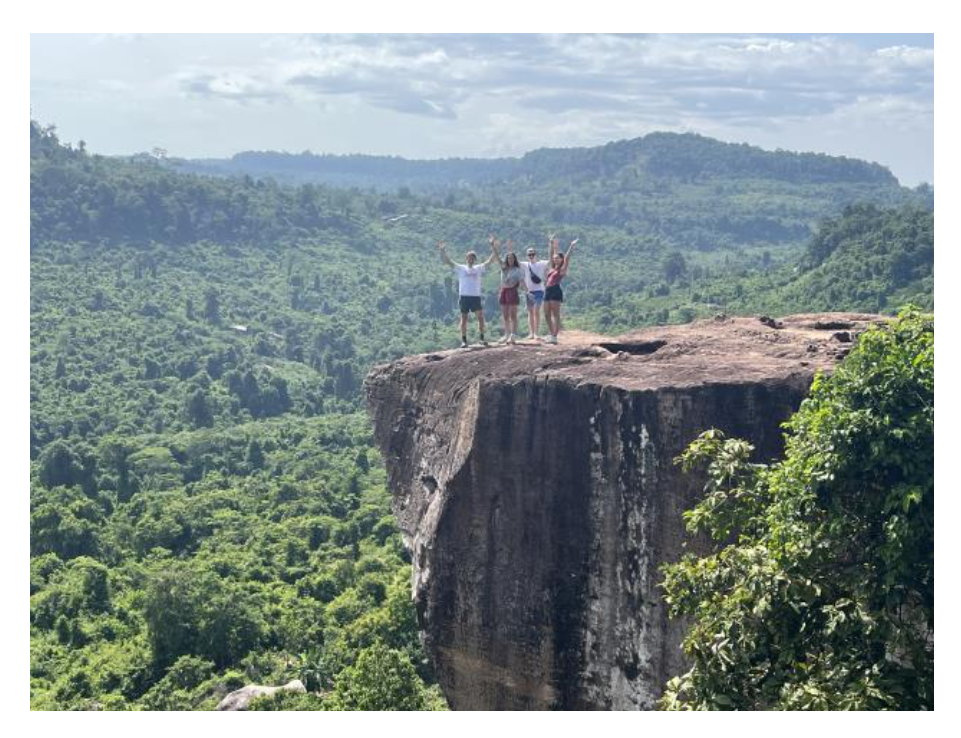
On our days off, we had the opportunity to travel around Cambodia. We visited the capital, Phnom Penh, Siem Reap, Sihanoukville, and the spectacular island of Koh Rong Sanleom. We also saw the UNESCO World Heritage Site of Angkor Wat and the beautiful Phnom Kulen National Park. It was important for the team to understand the impact that the Khmer Rouge regime had on Cambodia, so we paid a visit to The Cambodian Genocide Museum – a very emotional and chilling experience.
Picture
Exploring Phnom Kulen National Park
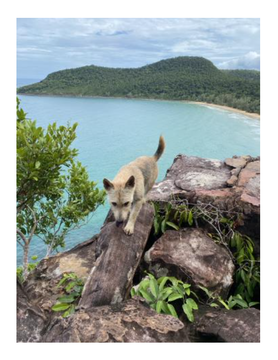
Picture
a curious dog on Koh Rong Sanleom
I’m extremely grateful for the opportunity to volunteer in Cambodia. I gained an insight into the environmental challenges of this developing country and gained invaluable hands-on experience, and developed my skillset. It was amazing to witness the social and economic benefits of aquaponics systems in a local community that faced challenges surrounding food and financial security. Living and working in a local community was an enriching experience, although at times it was challenging. We were exposed to many aspects of a local culture vastly different from our own and shared our wooden hut with mosquitoes and big spiders! Despite these stark differences in local culture, I loved every minute of my time in Cambodia. I am grateful to the Community First team - Romain, Nimol, Mab, Moeun & Rayouk – who welcomed us with open arms and taught us so much, including some of the Khmer language and Cambodian cuisine! We left Cambodia with lifelong memories and a deep appreciation for this beautiful country and its people.
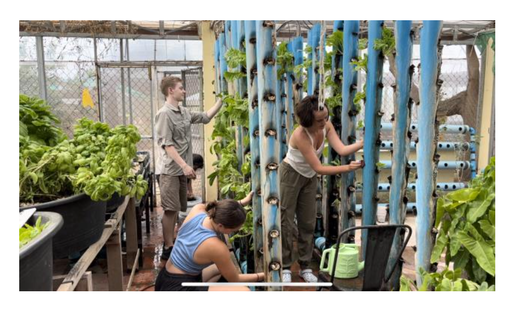
Picture
Maintaining the giant aquaponics system at the Farm School campus

Like this content? You can read more stories from the students of the University of Edinburgh, Engineering on their blog using these links:
  • Summer 2019
  • Summer2018
Are you a student or young adult wanting to add such an experience to your resume? Contact us directly through this website, or reach out to us on social media! We are always looking for highly motivated young people to share our community development and aquaponic experience with them.
0 Comments

Your comment will be posted after it is approved.


Leave a Reply.

© 2017 All rights reserved , Community First Initiatives, Inc. a registered nonprofit, non-stock 501c3 public charity under Tax ID Number26-2737598
Our Mailing Address is 530 South Lake Avenue, #334, Pasadena CA, 91101